

Prayer is more than a religious duty—it is the lifeline of every believer. Through prayer, we communicate with God, align our hearts with His will, and receive the strength we need to face life’s challenges. The Bible consistently presents prayer not as an option but as an essential practice for those who desire to walk closely with God.
Category: Random Thoughts

3 min read
0
7 Reasons Why You Are Not Feeling Blessed When You Go to Church
Many people leave church saying, “I wasn’t blessed today.” While it is true that sermons, music, and fellowship matter, Scripture reminds us that the condition of our hearts often determines what we receive. The church is not merely a place to consume spiritual experiences—it is where God shapes His people through His Word, His Spirit, and His body.
4 min read
0
7 Reasons Why Tithing is Required for Christians
Tithing has been a foundational practice among God’s people throughout Scripture. From the patriarchs to the Law of Moses and into the teachings of Jesus, giving a portion of one’s resources to God reflects worship, gratitude, and faithful stewardship.

4 min read
0
The War Within: Understanding the Believer’s Inner Struggle
One of the greatest misconceptions about the Christian life is that becoming a follower of Christ eliminates the struggle with sin. The Apostle Paul shatters that illusion in Romans 7:15–25. His transparent confession is both surprising and comforting:
2 min read
0
Entire Sanctification Is Purity of Intention
If you want to clear a room of Methodist theologians quickly, mention “entire sanctification” and then sit back. Half will defend it with the zeal of a prosecutor; the other half will begin slowly inching toward the exit. The doctrine has been abused so thoroughly — by those who claimed it made them immune to correction, and by those who silently abandoned it out of embarrassment — that recovering its original contours requires a kind of theological archaeology.
2 min read
0
The Means of Grace Are Not Optional Extras
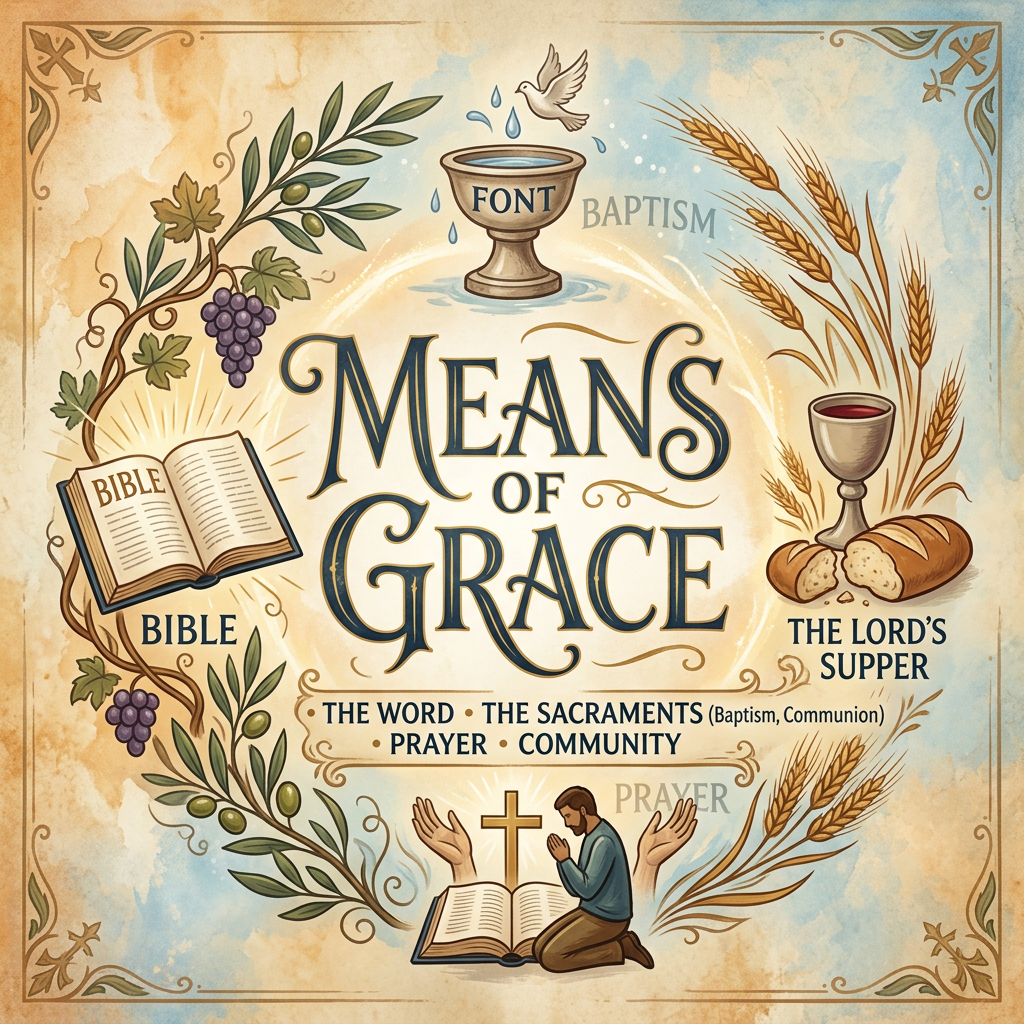
Modern spirituality loves the spontaneous. We want encounters, breakthroughs, mountaintop experiences — the burning-bush variety of religion. Wesley, who had a perfectly good burning-bush moment at Aldersgate in 1738, spent the rest of his life insisting that most of the Christian life happens nowhere near a burning bush. It happens at the table, at the font, on the knees, in the gathered community, in the open Bible.

2 min read
0
Why Wesleyans Cannot Stop Talking About Prevenient Grace
There is a peculiar temptation in evangelical Christianity to turn conversion into a human achievement. We speak of the moment we “decided for Christ” with the confidence of someone who found a great bargain at the market — as though salvation were a transaction we initiated and God graciously honored. John Wesley would have smiled at the sincerity and winced at the theology.
2 min read
0
What about Trinity Sunday? A Wesleyan Perspective
Trinity Sunday holds a profound place in the Wesleyan tradition, serving as more than just a theological checkpoint. For John Wesley and the early Methodist movement, the doctrine of the Trinity was not merely an abstract puzzle to be solved, but a vital framework for understanding the Christian life and the experience of God’s grace.