
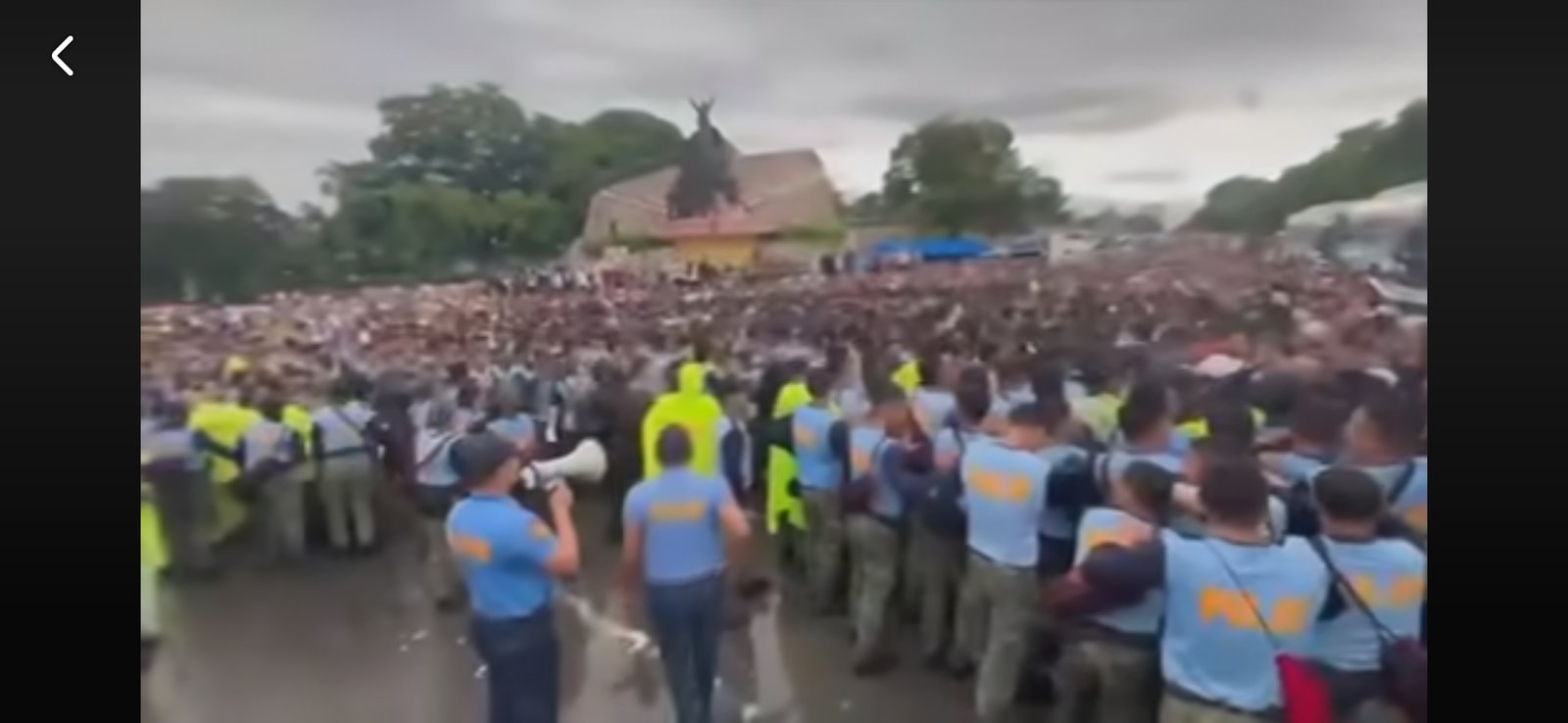

If you got caught in the absolute gridlock along EDSA and White Plains Avenue this morning, June 30, 2026, you didn’t just witness a massive traffic nightmare—you witnessed a historic shifting of the gears in Philippine political theology.
For decades, the script of public, faith-backed protest in the Philippines had a distinctly Roman Catholic (RC) flavor. When people thought of “faith on the streets” at the People Power Monument, they pictured statues of the Virgin Mary, rosaries, and priests in white cassocks leading the charge.
But this morning, the script flipped completely. The stage was claimed by the Iglesia ni Cristo (INC), mobilizing thousands of disciplined members in a flash protest triggered by the Ombudsman’s non-bailable plunder case against Senator Rodante Marcoleta.
This dramatic shift highlights a deeper, more uncomfortable reality about how different religious institutions view power, governance, and the concept of justice in our country today.
The Changing of the Guard on EDSA
Seeing EDSA filled not by Catholic parishes called upon by the Archdiocese, but by the highly organized, uniform mobilization of the INC, tells us that the monopoly on public morality has officially fractured.
Historically, the Roman Catholic Church viewed itself as the ultimate moral watchdog of the state. Today, however, that dynamic looks entirely different. While the INC took to the asphalt to aggressively shield one of their own under the banner of fighting “selective justice,” the Roman Catholic hierarchy has largely retreated to a much quieter, more institutional position.
Is the Roman Catholic Church Confined to “Selective Justice”?
There is a growing, palpable sentiment among observers that the RC church has become remarkably selective in its outrage. Why the sudden quiet from a basilica that used to shake the foundations of Malacañang?
The answer lies in the current political alignments. Under the current administration, many prominent Catholic priests and bishops have found themselves comfortably aligned with the state’s agenda. When religious leaders find themselves on the same side as the sitting administration, their prophetic voice often softens into institutional compliance.
- When the State Suits the Church: When the administration’s policies align with the interests or values of the Catholic hierarchy, the “watchdog” goes to sleep. Street protests are replaced by pastoral letters; prophetic anger is replaced by diplomatic dialogues.
- The Trap of Access: Siding with the administration grants access to power, but it costs prophetic independence. By maintaining a cozy relationship with the government, the RC church risks looking like it only decries injustice when it happens under an administration they dislike. When abuses or questionable legal maneuvers happen under a “friendly” government, the silence becomes deafening.
The Irony of the Monument
This leaves us with a fascinating, ironic picture of Philippine realpolitik:
The EDSA Paradox: The Roman Catholic Church—which practically built the political theology of EDSA—now watches from the sidelines, seemingly paralyzed by its cozy relationship with the administration. Meanwhile, the INC—an organization that historically stayed out of street politics in favor of behind-the-scenes bloc voting—now openly occupies EDSA to flex its muscle against state prosecutors.
When the state’s legal machinery is weaponized or perceived as biased, a church that is too close to the administration cannot convincingly cry foul. Their priests can no longer command the streets because their sermons have been domesticated by political comfort.
This morning’s protest proved that the streets don’t stay empty for long. If traditional religious institutions confine themselves to a selective, convenient version of justice because they are busy protecting their relationship with the powers that be, other well-organized groups will gladly step into the vacuum, rewrite the rules, and flip the tale of protest entirely.