



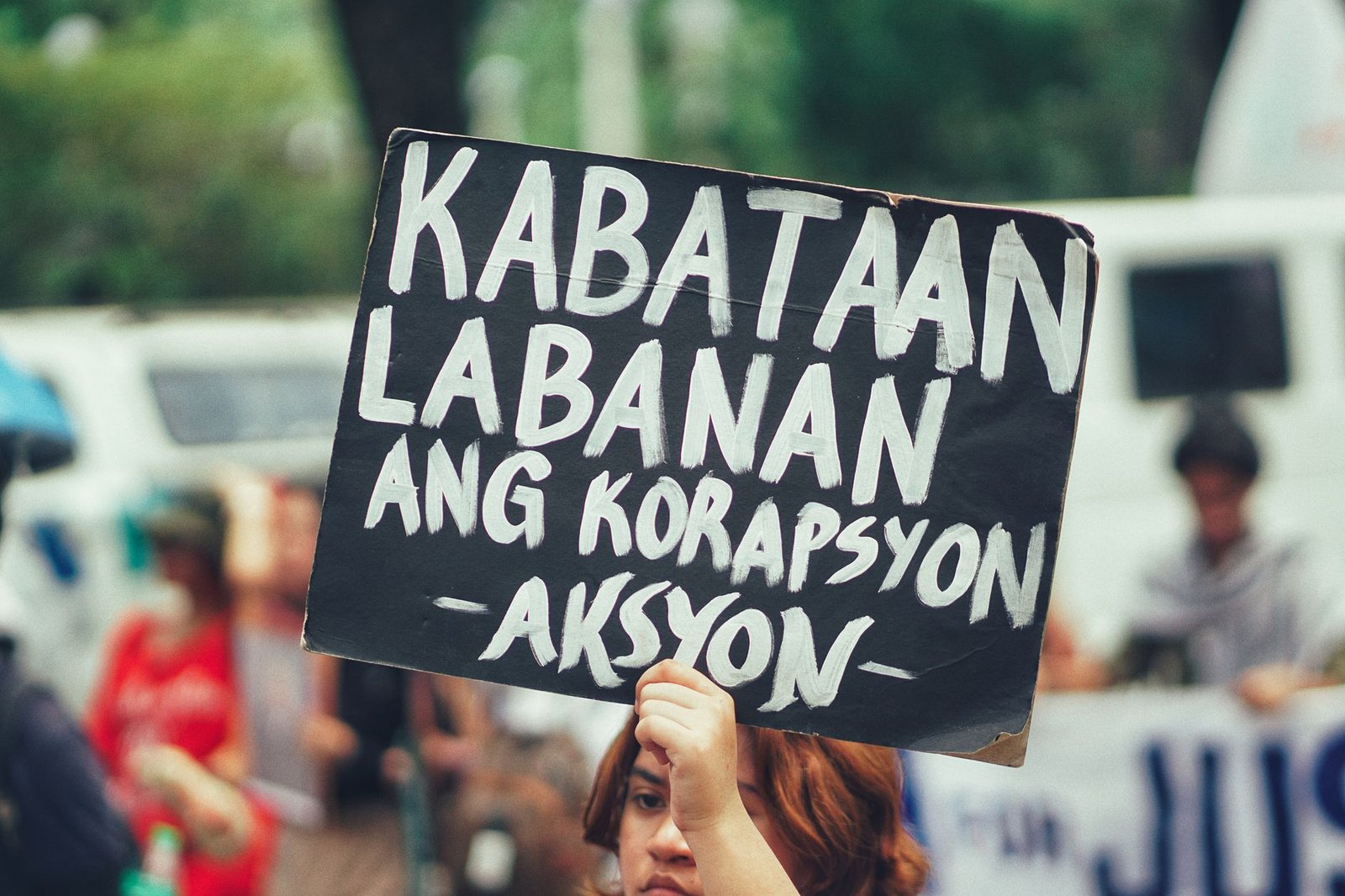

Do Not Lower the Age — Raise the Standard
When children commit crimes, the instinct to punish is understandable. But a nation that mistakes vengeance for justice has confused a symptom for a cure.
There is a recurring temptation in Philippine public discourse to reach for the simplest solution to the most complex problem. Crime is rising among children aged 10 to 15. The proposed remedy? Make them legally accountable adults before they have finished losing their baby teeth. It is the legislative equivalent of treating a fever by smashing the thermometer.
Let us be honest about what is actually being proposed. Lowering the minimum age of criminal responsibility is not a crime-prevention strategy. It is a punishment-expansion strategy — and there is a profound moral and theological difference between the two. One asks: how do we stop this from happening? The other asks: who do we hold responsible after it already has? A nation that cannot tell the difference has confused the courtroom for the classroom.
A child who commits a crime is, almost always, a child to whom a crime has first been committed — by poverty, by neglect, by a family that collapsed, by a state that looked away.
Scripture is not silent on this. When the disciples encountered a man born blind, their first theological instinct was: who sinned — this man or his parents? Jesus refuses the premise entirely (John 9:3). The question is not who is to blame. The question is what will be done to bring about restoration. That is the question a just society must ask about its children.
THE NEUROSCIENCE THE LAW CANNOT AFFORD TO IGNORE
The brain of a ten-year-old is not a small adult brain. It is a brain still under active construction — the prefrontal cortex, which governs impulse control, consequence assessment, and moral reasoning, does not reach full development until the mid-twenties. This is not a liberal talking point; it is established neuroscience. To hold a child of ten criminally liable at the same level as an adult is not justice — it is the willful disregard of what we know about human development.
John Wesley, who spent his life organizing societies for the reformation of the poor and the forgotten, understood that moral formation requires environment, time, and community. You cannot demand of a ten-year-old what has not yet been built into the architecture of the brain. What you can demand — what the church and the state together must demand — is that the conditions which produce child criminals be dismantled with the same urgency we currently reserve for punishing them.
What the data consistently shows:
- Countries with lower ages of criminal responsibility do not report lower youth crime rates — incarceration of children correlates with higher recidivism, not lower crime.
- The majority of child offenders in the Philippines come from communities with severe poverty, absent fathers, and failed schooling — structural conditions, not moral deficiency.
- Children placed in detention facilities before age 15 are significantly more likely to become adult offenders — the prison becomes the finishing school for crime.
- RA 9344, the Juvenile Justice and Welfare Act, already allows intervention, community service, and diversion programs — tools that are chronically underfunded and underused.
THE PASTORAL CONCERN: WHO IS SPEAKING FOR THE CHILD?
The church has always had a specific vocation in moments when the powerful move to punish the vulnerable. The prophets of Israel did not merely comfort the afflicted — they afflicted the comfortable. Amos did not write policy briefs; he named injustice by its proper name and refused the political convenience of the powerful.
When a twelve-year-old is recruited by a drug syndicate to be a runner, the syndicate is the criminal. The child is the victim of the criminal. Lowering the age of criminal responsibility does not touch the syndicate. It catches the child — and calls that justice. It is, in fact, the precise inversion of justice. It punishes the exploited rather than the exploiters.
We are not asked to be naively sentimental about child crime. We are asked to be ruthlessly honest about what produces it — and courageous enough to go after the roots rather than trim the branches.
The Proverbs instruct us to train up a child in the way he should go (Prov. 22:6). That is not a parenting tip. It is a social mandate. The “training” belongs not only to the family but to the community, to the school, to the church, and yes — to the state. When that formation fails across every institution simultaneously, the child standing before a judge is a symptom of collective failure wearing handcuffs.
WHAT WE SHOULD DO INSTEAD
This is not a call for impunity. Children who commit serious offenses require intervention — serious, structured, and sustained intervention. The question is what kind. The answer that Scripture, neuroscience, comparative law, and basic human decency all converge on is: restorative, rehabilitative intervention, not punitive incarceration.
Fund the Bahay Pag-asa centers adequately. Enforce the diversion programs already written into RA 9344. Prosecute with full force the adult handlers who use children as instruments of crime. Invest in public school quality, mental health services in barangays, and livelihood programs for families at the poverty threshold. Make the conditions of child crime so inhospitable that recruitment becomes difficult — not because we have lowered the age of liability, but because we have raised the standard of care.
The church’s role is to say this loudly, in public, at every legislative hearing, in every barangay assembly, from every pulpit. The children of the poor are not political props. They are, in the language of Jesus himself, the ones in whose face we encounter the face of Christ (Matt. 25:40). How we treat the least of these is not a footnote to our national character. It is the definition of it.
“Learn to do good; seek justice, correct oppression; bring justice to the fatherless, plead the widow’s cause.”
— Isaiah 1:17 (ESV)